The admin panel where sales and support handle clients, licenses and invoices all day. And the regulated changes on the customer side: vetted trials, verification, bans, each announced 30 days ahead.
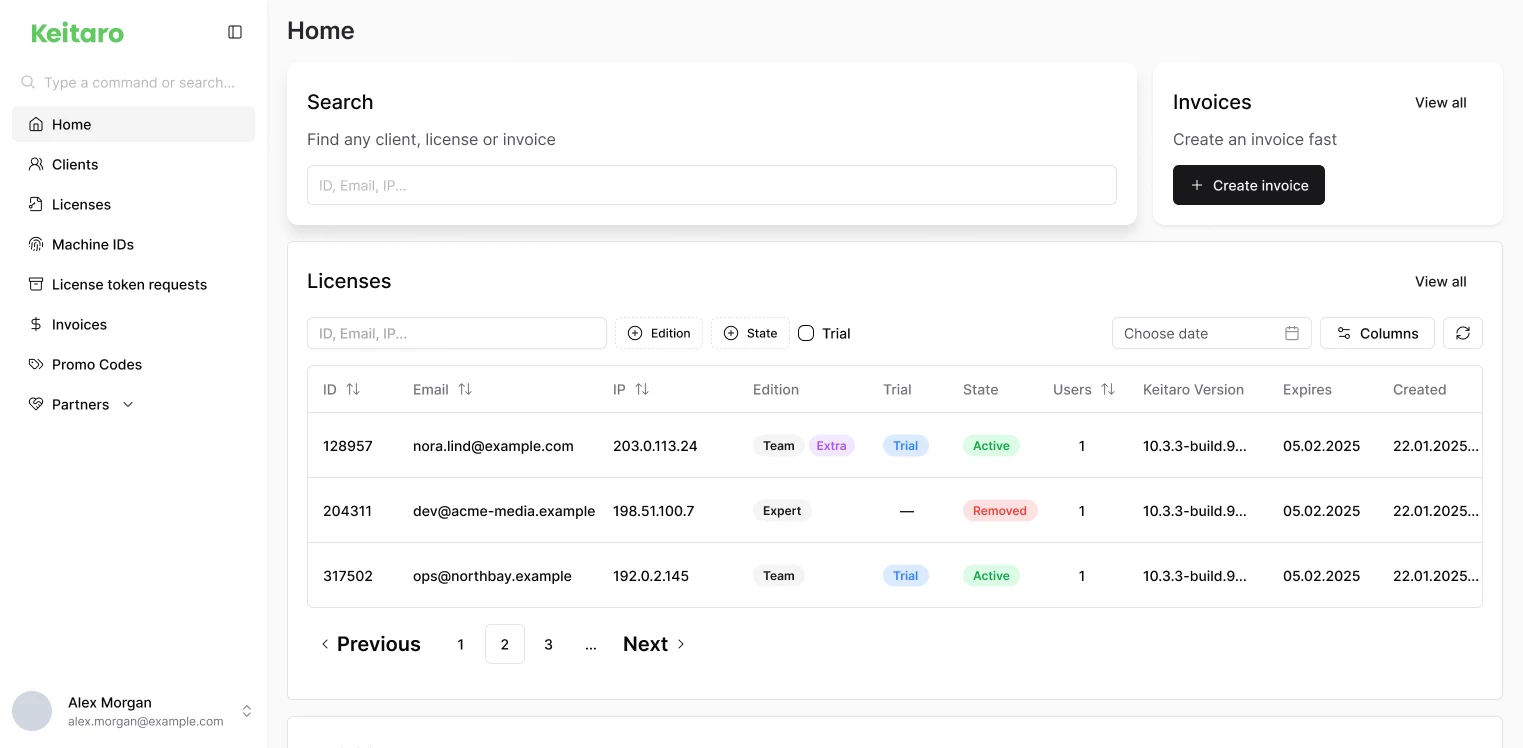
Home. Search across clients, licenses and invoices, a quick invoice, and the latest licenses with filters. Demo data.
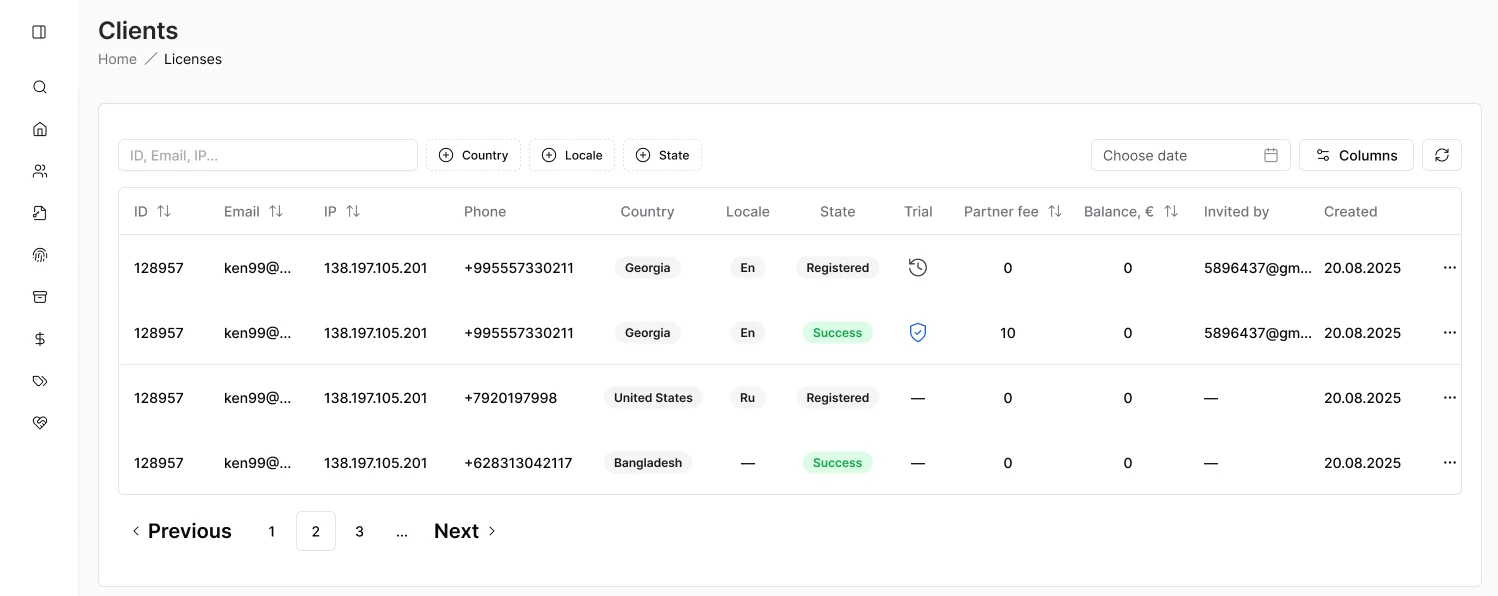
ListOne table: search, filter chips, columns, date range, row actions
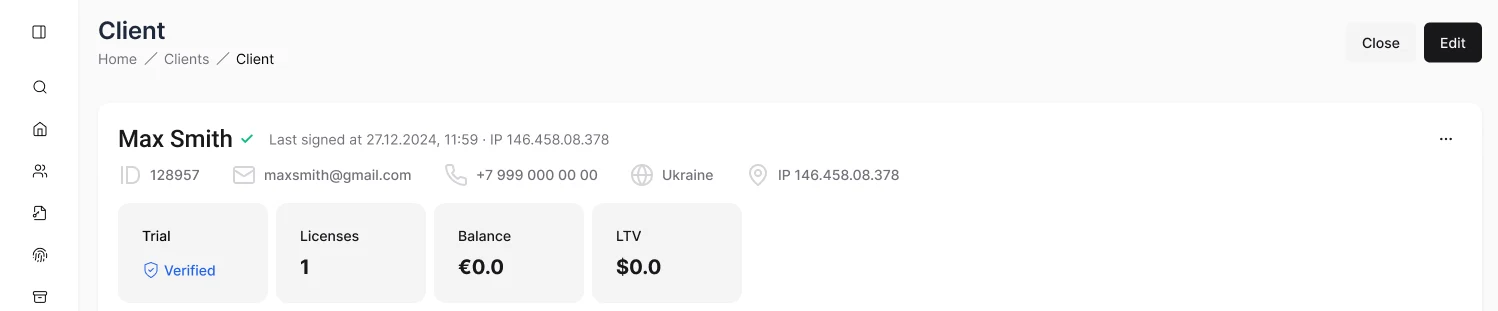
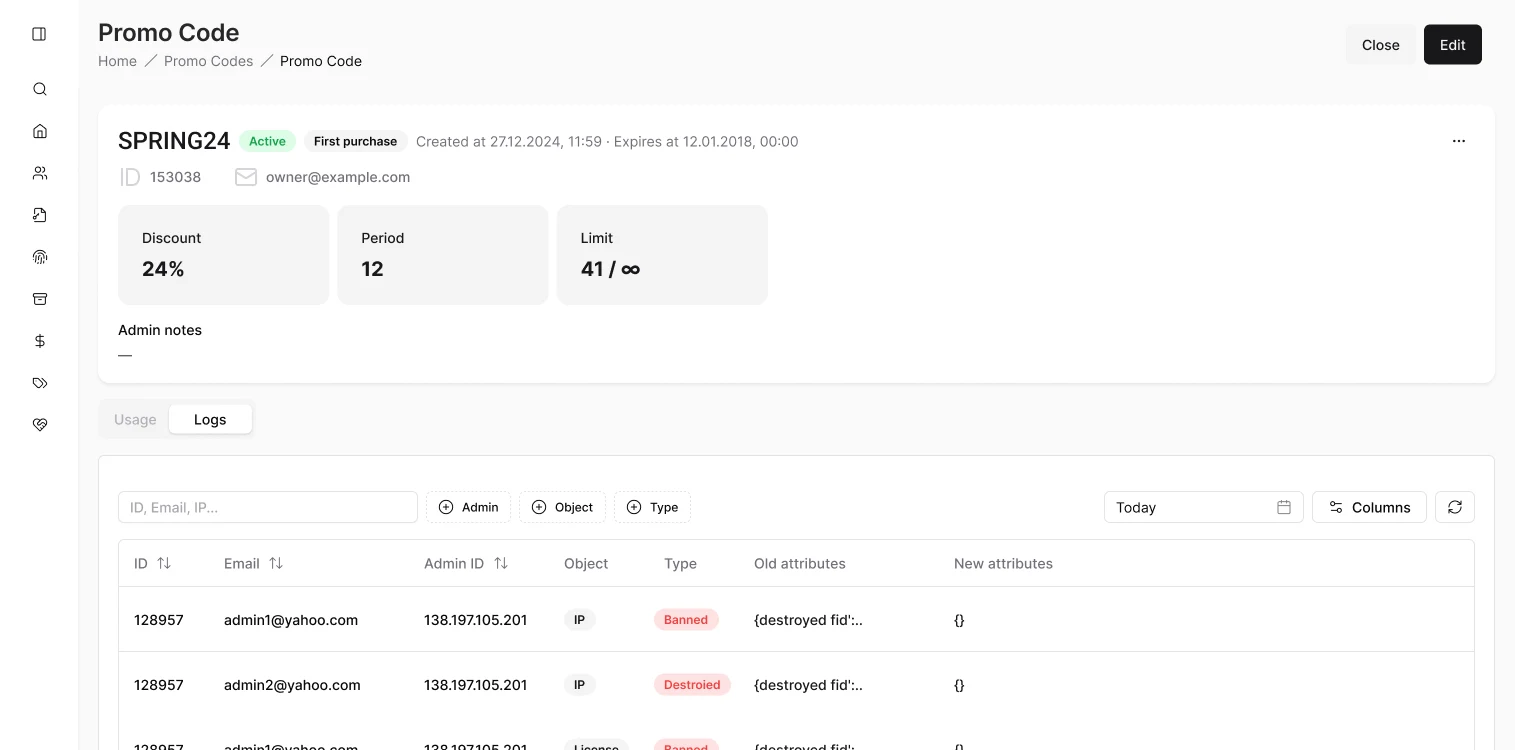
DetailsKey numbers first, then tabs: licenses, invoices, logs
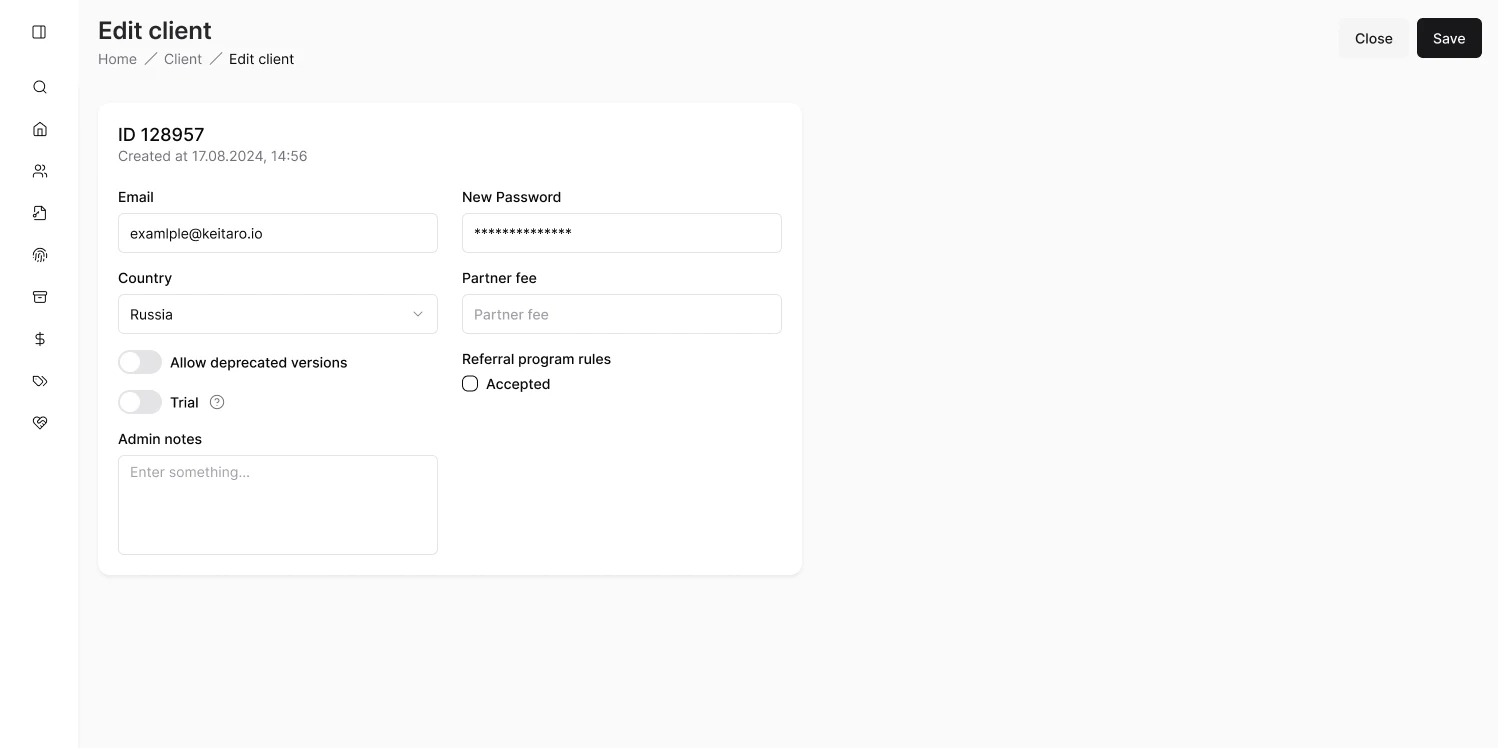
Edit or createOne form. The header keeps its shape, only the buttons change
Three levels, one shape. Every entity goes list, details, edit. The sidebar stays, the header only swaps its buttons, the tables are the same component everywhere.
Decisions
One table for every entity. Clients, licenses, invoices and promo codes share the same list: search field, filter chips, column picker, date range, row actions. A new teammate learns the pattern once. The Trial column shows who has a trial and whether it was verified, without opening the client.Numbers first, tabs after. A client page opens with the four things support asks about: trial, licenses, balance, lifetime value. Licenses, invoices, machine IDs and logs sit in tabs below. Every manual action can be explained in admin notes, so the next person sees why a license was extended or a key was blocked.
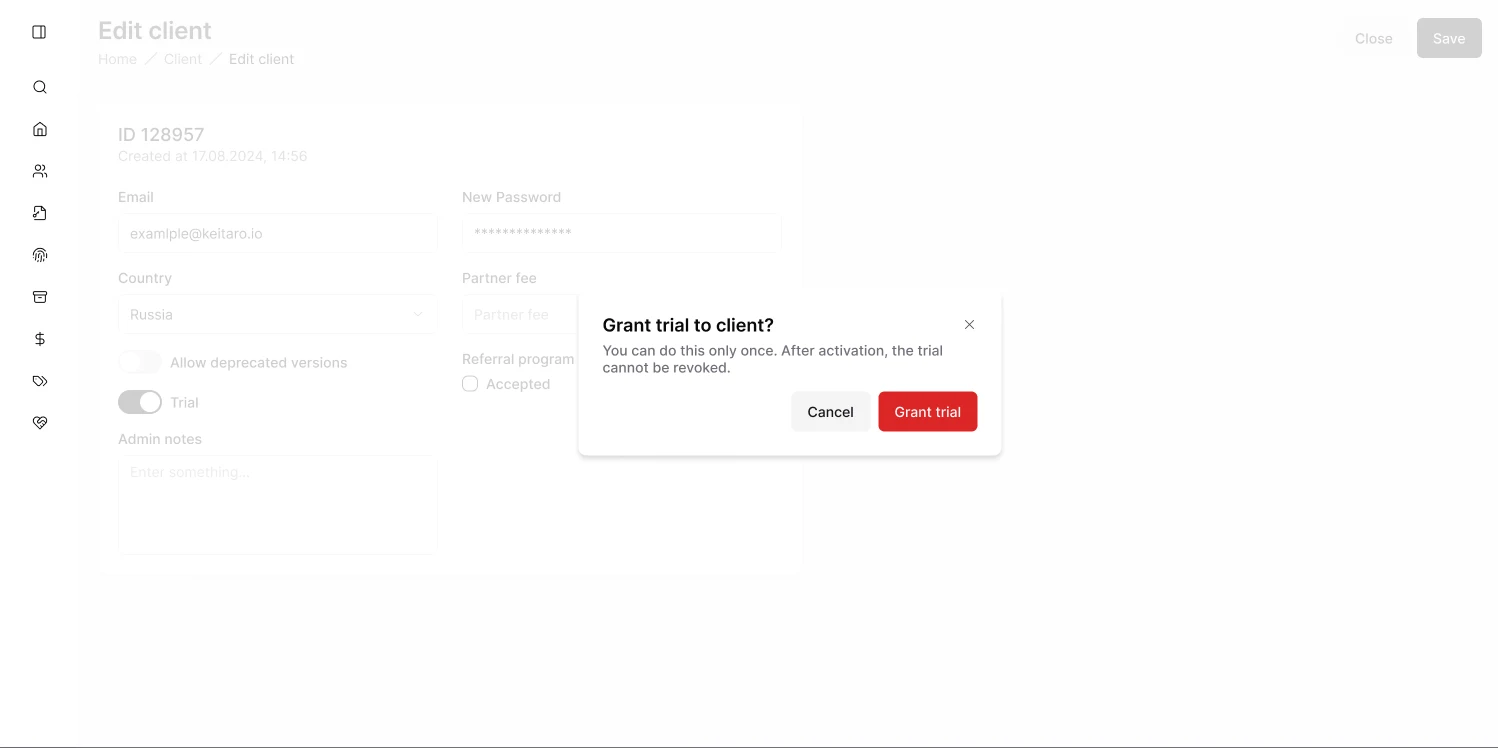
Trial as one toggle. The compliance plan said: free trials only for clients who match the target profile and carry no risk. A client books a call, customer success decides. In the panel that decision is a single switch in the client form.One-way, so it asks. A trial cannot be taken back once the client activates it. The dialog says exactly that before anything happens. No loading state: the change goes through the normal edit form.
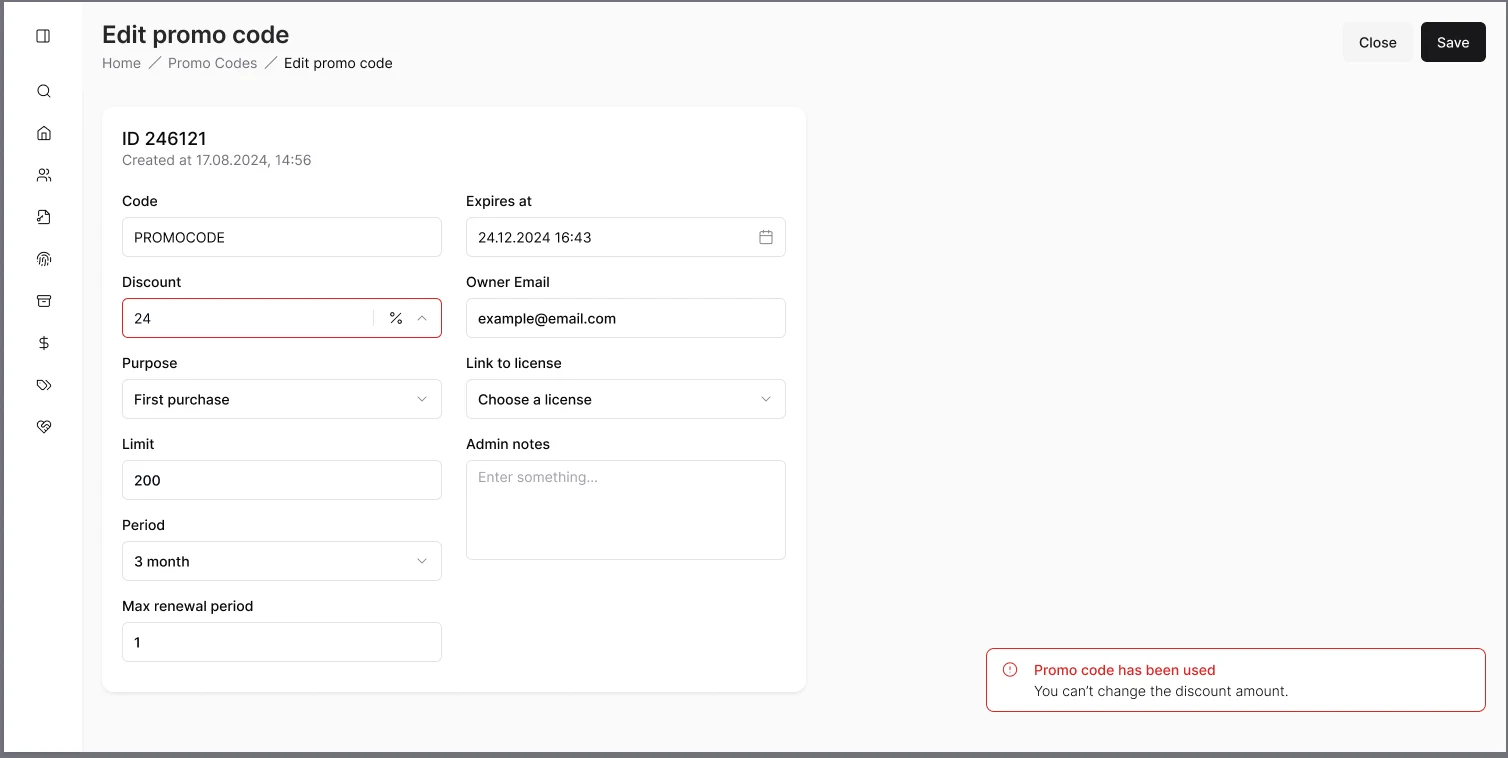
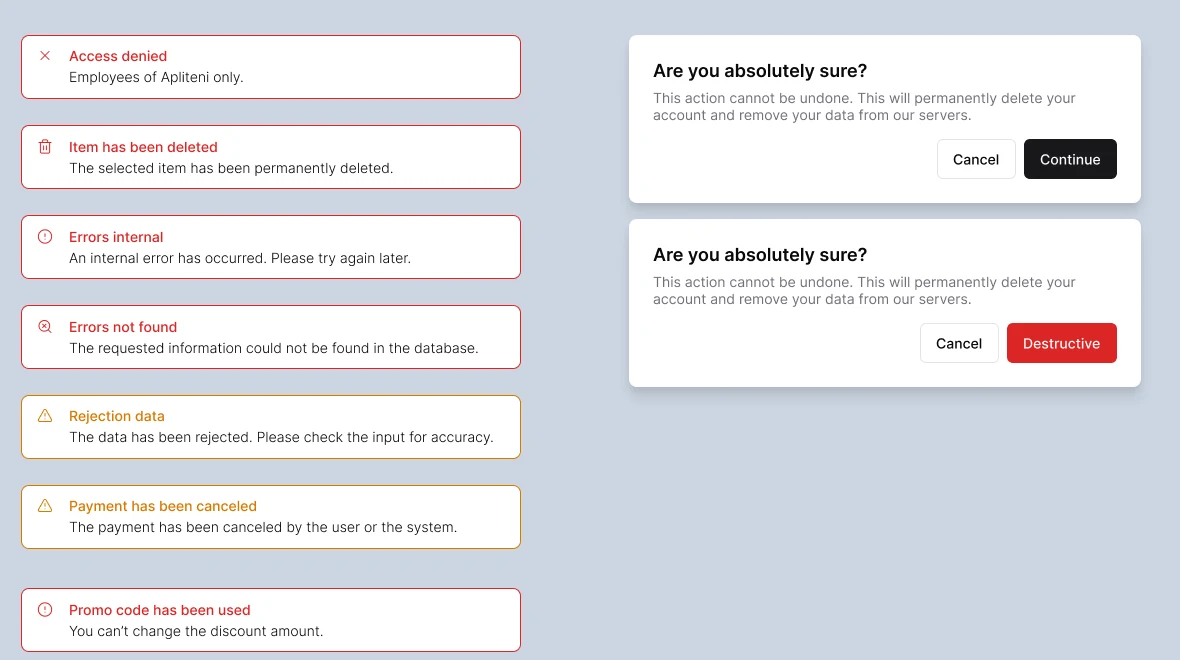
Details. A promo code opens the same way a client does: numbers on top, notes, then tabs with the usual table underneath.Edit. One form for create and edit. A used promo code keeps its discount locked, and the toast says why.
DraftFlows and copy, in parallel with legal review
ReviewLegal edits details in ready drafts
Day 0Notice by email and in the product
Days 1 to 30Answers in the UI, docs and support
Day 30The change goes live
Design in parallel with legal. Verification, payment method changes and bans for abuse all had to be announced 30 days ahead, and legal review used most of that window. I drafted flows and copy before sign-off and prepared variants for the open points, so review changed wording, not structure.
!Account verification required from 30 AprilTo keep using the service after this date, verify your account. It takes about two minutes.Verify nowWhat changes
Day 0 · noticeTodayDay 30 · live
Every notice answers three questions. What changes, from which date, what to do now. Interface text, emails and documentation use the same terms, so a customer who read the email recognises the screen. Recreated example; real notices are shown in a call.
Design system of the panel
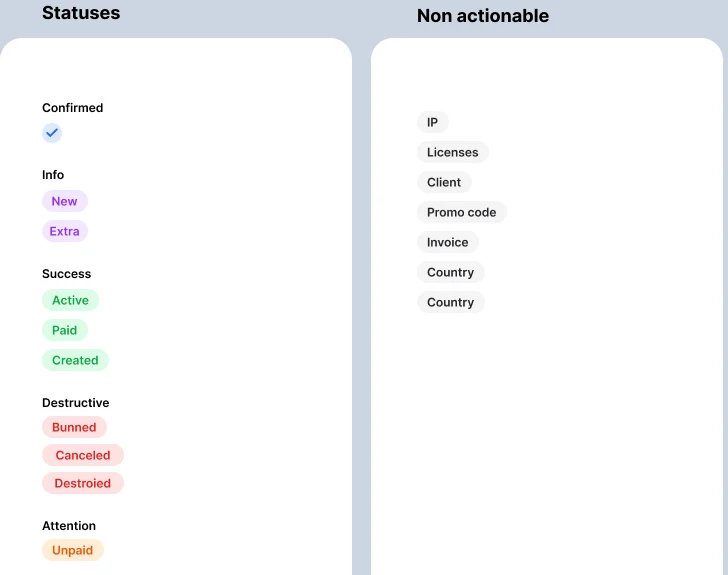
Badges. Status badges by group, and plain labels that do nothing on click.
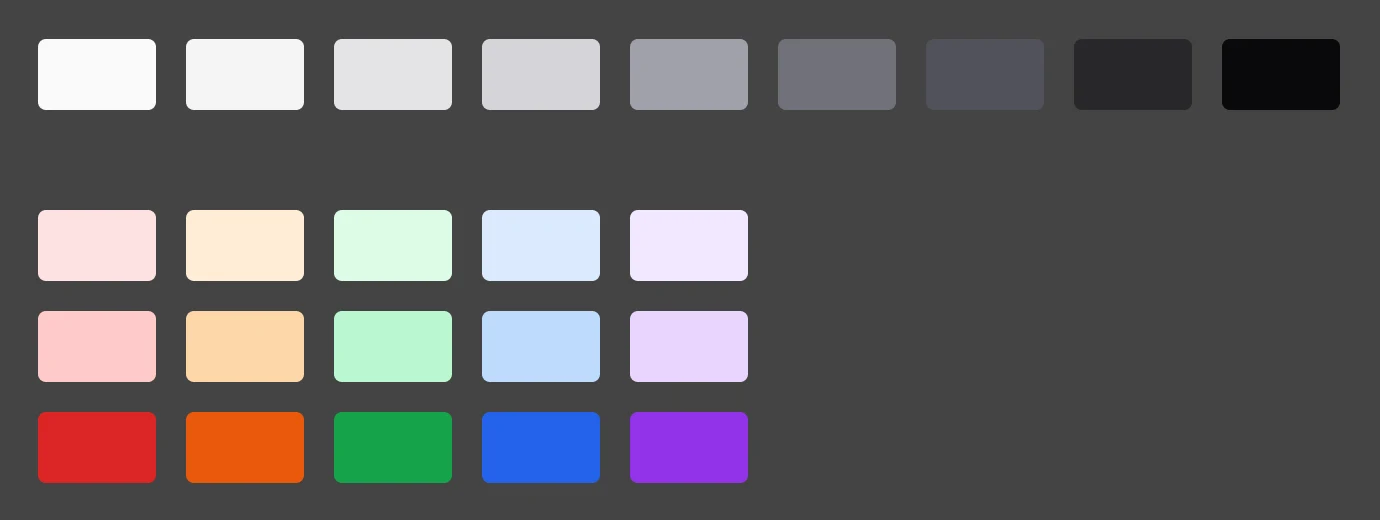
Palette. Nine greys, five accents in three tints.Empty table. The same component, with nothing to show.
Alerts and confirmations. Errors, warnings and two dialogs; the destructive one gets a red button.
Smaller decisions
Global search groups results by type and shows a clear state when nothing matches.
Trial states mapped before any screen: not granted, granted, activated by the client, expired, toggle locked. Each got its own wording.
The rollout had two steps: hide the public "Get trial" button once the demo and intake form were live, then let customer success switch it on per client. Rules and automation were left for later on purpose.
Before the change the team agreed on a floor for registration-to-payment conversion, so fewer trials could be measured, not guessed.
Staff accounts are created at onboarding on a corporate email, work behind the company VPN and are archived when someone leaves.
Email templates and unsubscribe rules for the notice mailings; segmentation by the analyst. Terms and privacy texts by the compliance engineer, placed and tracked in the product by me.
Before each release I wrote down the questions customers would ask and answered them in the UI and the documentation.
What happened
All three regulated changes shipped inside their notice windows. Support saw fewer repeated questions after the releases, because the answers were already on the screen. Trials now go only to vetted clients, and the success team still grants one in a single toggle.
My part
I was the only designer. Structure of the panel, all states and screens, interface copy and customer notices, review of the built screens before release. The product manager owned priorities, the compliance officer owned the legal texts, developers estimated every option with me before I drew it.